

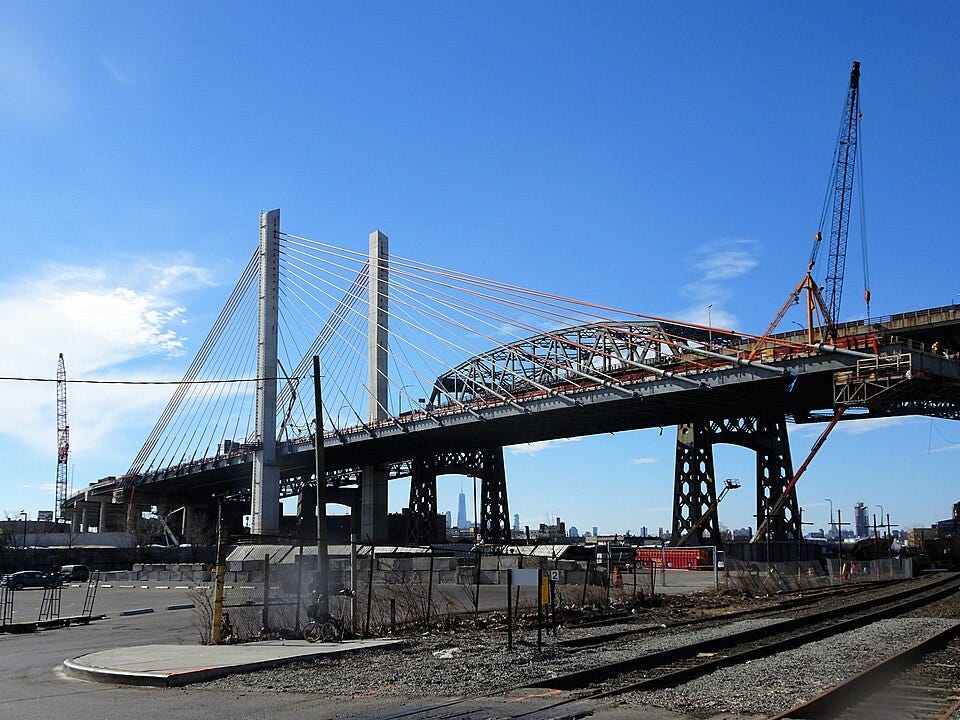
Drive across the Kosciuszko Bridge between Brooklyn and Queens and you are honoring Tadeusz Kościuszko, a man born on land that is now Belarus. [1]
Americans generally know Kościuszko as the Polish military engineer who helped fortify West Point and later led the 1794 uprising against Russia and Prussia. [2]
Kościuszko was born in 1746 at Mereczowszczyzna, then in the Grand Duchy of Lithuania within the Polish–Lithuanian Commonwealth and now in Belarus’s Ivatsevichy District. [3] Belarus’s first public monument to him was unveiled near his birthplace in 2018. [4] He is now commemorated as a hero in Poland, the United States, Lithuania, and Belarus.
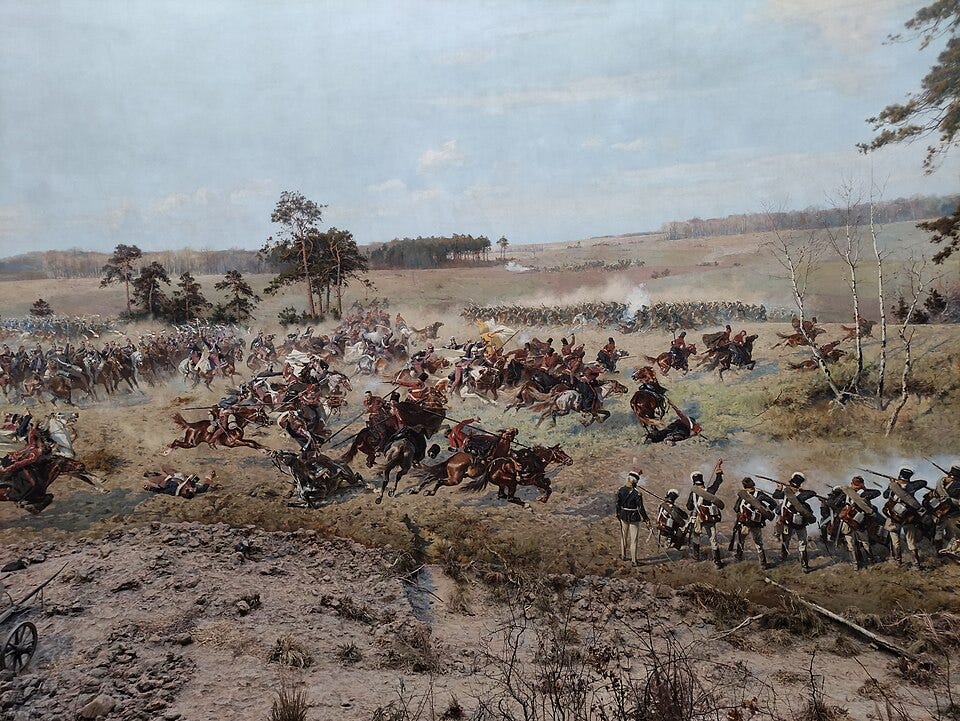
When tourists visit Wrocław, Poland, today, they are likely to venture to see the rotunda that houses the Racławice Panorama — the monumental 15-by-114-meter cyclorama painted in 1893–94 by Jan Styka, Wojciech Kossak, and a team of collaborating artists to mark the centennial of the Kościuszko Uprising against Russian rule — and they are looking at a scene depicting an army that included Belarusian and Lithuanian recruits, led by a man whose birthplace lies well inside today’s Belarusian border. [5]
The painting was originally unveiled in Lwów (now Lviv, Ukraine) as part of the General National Exhibition of 1894, survived bombing raids and years hidden in a makeshift crate during and after the Second World War, and was considered too “politically incorrect” a subject for public display under Communist rule until it finally found its permanent home in Wrocław in 1985. Today, there is no satellite exhibit in Belarus; the Kremlin would not countenance it, but within a democratic Belarus, it could happen.
This is more than a biographical curiosity. It illuminates the layered history that the Karski-Swyer Initiative exists to explore.
People whose identities do not fit modern borders
For centuries, most of the lands of present-day Belarus belonged first to the Grand Duchy of Lithuania and then to the Polish–Lithuanian Commonwealth. The region was multiethnic and multireligious. Polish became the principal language of much of the nobility and educated elite; East Slavic vernaculars that contributed to modern Belarusian were widely spoken among the rural population; and Jewish communities became central to the life of many towns. [6] A modern Belarusian national movement emerged mainly in the nineteenth and early twentieth centuries. Applying today’s national categories mechanically to earlier centuries therefore risks anachronism.
Adam Mickiewicz, generally regarded as Poland’s national poet, began Pan Tadeusz with the invocation “Lithuania, my homeland!” He was born near Navahrudak, in present-day Belarus, wrote in Polish, and understood “Lithuania” as the historical homeland of the former Grand Duchy rather than the modern Lithuanian nation-state. [7] Ignacy Domeyko, born near Nyasvizh, participated in the 1830–31 Polish uprising before becoming a renowned scientist and university reformer in Chile; Poles, Belarusians, Lithuanians, and Chileans all commemorate him. [8]
Napoleon Orda, born near present-day Ivanava, documented the architectural heritage of the former Commonwealth. Stanisław Moniuszko, born at Ubiel near Minsk, became a foundational figure in Polish national opera. Eliza Orzeszkowa spent most of her life in Hrodna and became one of the leading Polish-language novelists of the nineteenth century. [9] These lives resist exclusive national ownership.
Kościuszko presents the same problem. He led an uprising of the Polish–Lithuanian Commonwealth and is buried in Wawel Cathedral, yet his birthplace is in present-day Belarus. It is safer to describe him as a figure of shared Polish, Lithuanian, Belarusian, and American heritage than to assign him a single modern nationality for every purpose.
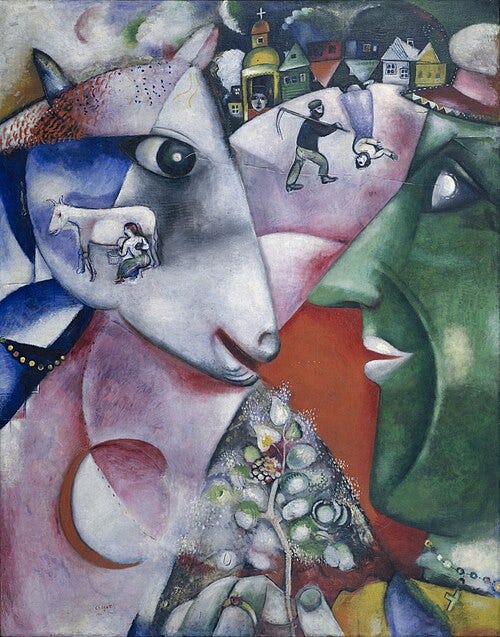
The region’s Jewish history makes the inadequacy of modern territorial labels even clearer. Chaim Weizmann was born in Motal and became Israel’s first president; Menachem Begin was born in Brest; Shimon Peres was born in Vishnyeva; and Marc Chagall was born in Vitebsk. [10]
They are principally remembered as Jewish, Israeli, or—in Chagall’s case—French and Jewish cultural figures. Calling them merely people who “happened” to be born in Belarus, however, would understate the importance of the places, languages, communities, and landscapes that shaped them.
There were also nineteenth-century figures who consciously helped create a distinct Belarusian literary and political tradition. Kastuś Kalinoŭski (Konstanty Kalinowski), a leader of the 1863–64 uprising, published Mużyckaja praŭda, one of the earliest periodicals in Belarusian. [11] Vincent Dunin-Marcinkievič (Vintsent Dunin-Martsinkyevich) wrote in both Polish and Belarusian and is regarded as a founder of modern Belarusian literature. [12] Their work shows that Belarusian identity was developing through choices about language, political allegiance, and audience—not appearing suddenly from a historical vacuum.
A major Jewish homeland destroyed by the Holocaust
No account of these lands is complete without the scale of their Jewish history. Before the Holocaust, Jews formed a large share of the population in many Belarusian towns and cities; in some places they were a majority. In the Belarusian Soviet Socialist Republic, Yiddish was one of four official languages—alongside Belarusian, Russian, and Polish—from the 1920s until 1938. [13] Nazi Germany and its collaborators murdered most of Belarus’s Jewish population. The World Jewish Congress estimates that nearly 90 percent were killed. [14] The Jewish population of Belarus today is only a small fraction of its prewar size.
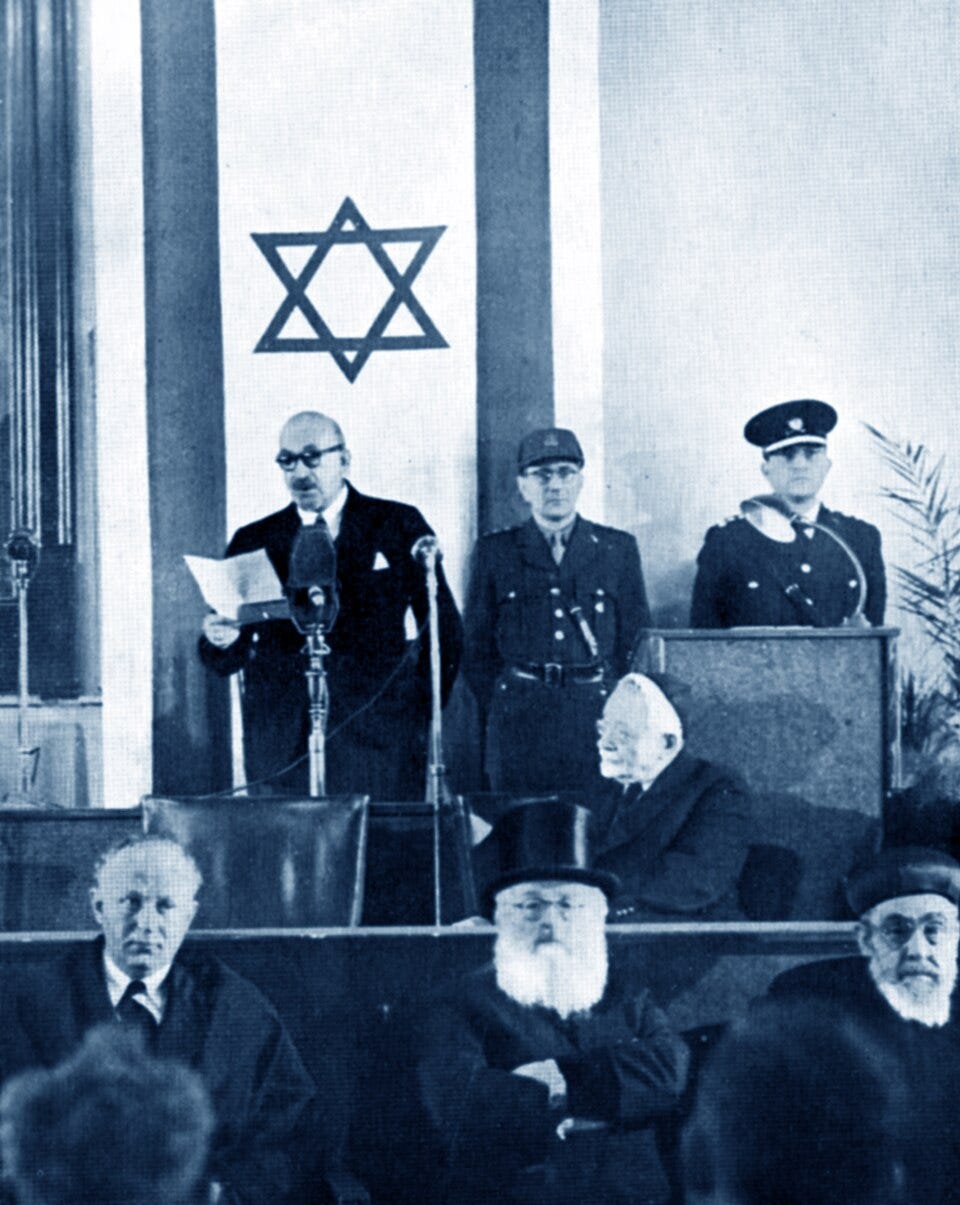
("Dr. Chaim Weizmann" — Library of Congress (Bain News Service)
The list of globally influential Jewish figures born on this territory is extraordinary. In addition to Weizmann, Begin, Peres, and Chagall, it includes Eliezer Ben-Yehuda, a central figure in the revival of spoken Hebrew; historian Simon Dubnow; painters Chaim Soutine and Ossip Zadkine; songwriter Irving Berlin; retailer Michael Marks; labor leader David Dubinsky; and mathematician Issai Schur. [10] The details of birthplace and self-identification vary, so each biography should be stated with care rather than assembled under a single, retrospective nationality.
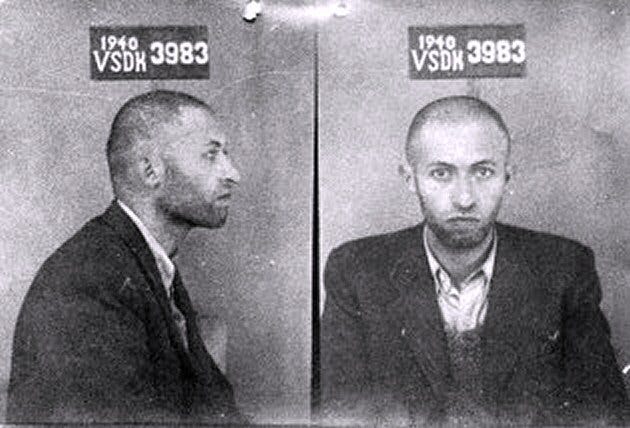
(Picture after the arrest of Menachem Begin in September 1940 by the NKVD (the picture was located in KGB archives).
Čeština: Fotografie Menachema Begina pořízená po jeho zatčení sovětskou tajnou službou NKVD.
The Bielski brothers—Tuvia, Asael, and Zus—formed a partisan group after the murder of members of their family in the Nowogrodek ghetto. More than 1,200 Jews survived under the group’s protection in the forests of western Belarus, one of the Holocaust’s most remarkable rescue operations. [15]
![Jewish partisans in Naliboki forest, near Novogrudok. [LCID: 76525]](https://substackcdn.com/image/fetch/$s_!YkzC!,f_auto,q_auto:good,fl_progressive:steep/https%3A%2F%2Fsubstack-post-media.s3.amazonaws.com%2Fpublic%2Fimages%2F80a937be-985d-4a35-8aed-e9ed9b961dca_1024x575.jpeg "Jewish partisans in Naliboki forest, near Novogrudok. [LCID: 76525]")
It is from this same historical landscape—Vileyka, then in the Russian Empire and now in Belarus—that Solomon Pinchas Swyer came. He later lived in Minsk before emigrating to the United States in 1913. The Karski-Swyer Initiative was founded in part to honor his memory.
It is
Why this matters for the Initiative
The Karski-Swyer Initiative to Promote Belarusian Studies takes its name from two men connected to this terrain of overlapping identity and catastrophe: Jan Karski, the Polish underground courier who carried eyewitness reports about the destruction of European Jewry to Allied leaders and later taught for four decades at Georgetown University; and Solomon Pinchas Swyer, born in Vileyka and shaped by a borderland that passed through several political orders before he left for the United States. [16]
A democratic and secular Belarus should be able to embrace this inheritance without forcing historical figures into a single modern category. It need not insist that Kościuszko, Mickiewicz, Weizmann, or Chagall was “really Belarusian” in today’s national sense. It can say instead: these people came from this land; their identities were Polish, Jewish, Lithuanian, Belarusian, imperial, local, or some combination of those; and their achievements form part of a shared history.
Such an embrace also requires honest scholarship about antisemitism, the Holocaust, local collaboration and resistance, Soviet repression, Polonization and Russification, and the gradual formation of Belarusian national consciousness. None of those histories should be reduced to a patriotic morality tale.
The Initiative’s two inaugural $2,000 awards—one for academic research on Belarus and one for human-rights and rule-of-law work concerning Belarus—are intended to support precisely this kind of careful inquiry and engagement.
Applications and nominations for the inaugural Karski-Swyer Awards will be reviewed starting September 1. No award decisions will be finalized before September 25, and all applicants will be notified by October 1.
https://karski-swyer-belarus-initiative.org.
Endnotes
[1] New York State Department of Transportation, “Kosciuszko Bridge Project,” https://www.dot.ny.gov/kbridge/; National Park Service, “Thaddeus Kosciuszko,” https://www.nps.gov/thko/learn/historyculture/kosciuszkobio.htm.
[2] National Park Service, “Kosciuszko’s Will,” https://www.nps.gov/thko/learn/historyculture/kosciuszkoswill.htm; National Archives, “Last Will and Testament of Thaddeus Kosciuszko,” https://founders.archives.gov/documents/Jefferson/01-30-02-0125.
[3] U.S. Army Europe and Africa, “Tadeusz Kościuszko (1746–1817),” March 13, 2025, https://www.europeafrica.army.mil/Who-We-Are/Mission-History/Heroes-of-Two-Nations/Army-250-Biography-view-page/Article/4118670/tadeusz-kociuszko-1746-1817.
[4] “Tadeusz Kosciuszko and the Un-Soviet Heroes of Belarus,” BelarusDigest, June 14, 2018, https://belarusdigest.com/story/tadeusz-kosciuszko-and-the-un-soviet-heroes-of-belarus.
[5] Panorama Racławicka, “About the Panorama,” https://panoramaraclawicka.pl/en/about-the-panorama.
[6] Encyclopaedia Britannica, “Grand Duchy of Lithuania,” https://www.britannica.com/place/grand-duchy-of-Lithuania; YIVO Encyclopedia of Jews in Eastern Europe, “Belarus,” https://encyclopedia.yivo.org/article.aspx/Belarus.
[7] Culture.pl, “Adam Mickiewicz,” https://culture.pl/en/artist/adam-mickiewicz; Palace of the Grand Dukes of Lithuania, “Lithuania, My Homeland … Adam Mickiewicz and His Poem Pan Tadeusz,” https://www.valdovurumai.lt/en/exhibitions/i/7533/lithuania-my-homeland-adam-mickiewicz-and-his-poem-pan-tadeusz.
[8] National Archives of the Republic of Belarus, “Ignacy Domeyko,” https://archives.gov.by/en/welcome-to-the-archives-of-belarus-website/subject-guides-to-archival-records/famous-people/ignasy-domeyko/ignasy-domeyko-2; and Culture.pl, “Ignacy Domeyko: The Philomath of Chile,” https://culture.pl/en/article/ignacy-domeyko-the-philomath-of-chile.
[9] Culture.pl, “Napoleon Orda,” https://culture.pl/en/artist/napoleon-orda; Culture.pl, “Stanisław Moniuszko,” https://culture.pl/en/artist/stanislaw-moniuszko; Culture.pl, “Eliza Orzeszkowa,” https://culture.pl/en/artist/eliza-orzeszkowa.
[10] YIVO Encyclopedia of Jews in Eastern Europe, “Belarus,” https://encyclopedia.yivo.org/article.aspx/Belarus; and World Jewish Congress, “Community in Belarus,” https://www.worldjewishcongress.org/en/about/communities/BY. Individual biographical entries should be consulted when precise birthplaces or identities are material.
[11] Mikołaj Gliński, “Kastuś Kalinoŭski & the Rise of the Political Idea of Belarus,” Culture.pl, September 13, 2023, https://culture.pl/en/article/kastus-kalinouski-the-rise-of-the-political-idea-of-belarus; Aliaksandr Smaliancuk, “Kastuś Kalinoŭski and the Belarusian National Idea: Research Problems,” The Journal of Belarusian Studies 8, no. 1 (2015), https://belarusjournal.com/article/kalinouski-and-the-belarusian-national-idea-research-problems.
[12] Jan Zaprudnik, Historical Dictionary of Belarus (Scarecrow Press, 1998), entry on Vintsent Dunin-Martsinkyevich; Belarusian Institute of Arts and Sciences, Canada, “Vintsent Dunin-Martsinkyevich,” https://binim.org/index.php/this-day-in-history/1808-02-04.
[13] YIVO Encyclopedia of Jews in Eastern Europe, “Belarus,” https://encyclopedia.yivo.org/article.aspx/Belarus; World Jewish Congress, “Community in Belarus,” https://www.worldjewishcongress.org/en/about/communities/BY.
[14] World Jewish Congress, “Community in Belarus,” https://www.worldjewishcongress.org/en/about/communities/BY.
[15] United States Holocaust Memorial Museum, Holocaust Encyclopedia, “The Bielski Partisans,” https://encyclopedia.ushmm.org/content/en/article/the-bielski-partisans.
[16] United States Holocaust Memorial Museum, Holocaust Encyclopedia, “Jan Karski,” https://encyclopedia.ushmm.org/content/en/article/jan-karski; Georgetown University, “Jan Karski,” https://karski.georgetown.edu/karski.